Sessio Nullus -- Florentine Campaign
- Antaine

- Jun 5, 2024
- 13 min read
Updated: Oct 22, 2024
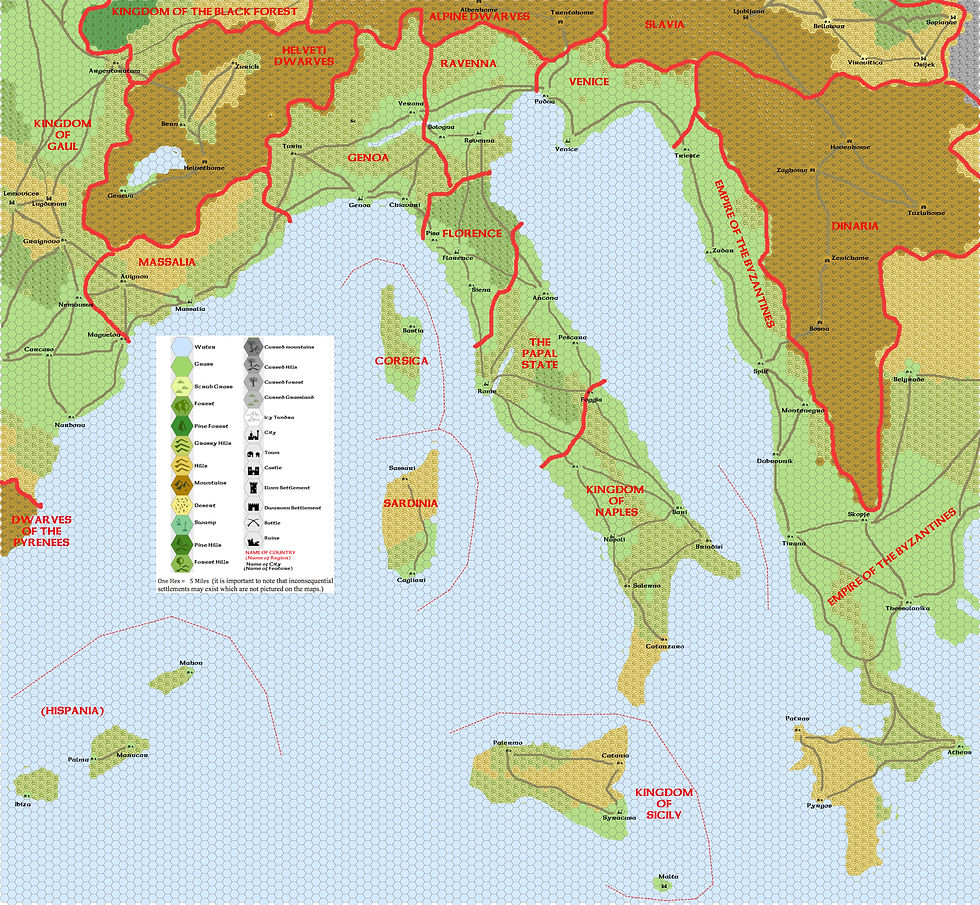
Yes, I know it's kind of weird to have a "Session 0" when I'm the only one playing in the campaign. I've been enjoying developing my setting so much, I really wanted to play in it myself. I figured I'd give this a shot to run a solo campaign using ChatGPT to DM for me. I rolled up the following character and set him in a part of the world none of my campaigns have touched yet, but which should be full of intrigue, politics, and diplomacy: Italy.
I also wanted to further develop the lore for this region, so I figured I could do this and make note of the organic developments.
I gave ChatGPT all the world lore that's already been posted here for the other campaign as well as all the Italy-specific information I have printed below my character. Let's see how this experiment goes...
My character is Avicellus, a level-3 human magic-user. Avicellus dresses from head to foot in the costume traditionally associated with the medieval plague doctors. He grew up in Florence, and he learned the healing arts (and some magic and alchemy) during a brief outbreak of plague that affected the city for two years (it seems to have disappeared within the past six months) by apprenticing with the local master doctor, Tursianus. When his master died of the plague, a few months before the epidemic waned, Avicellus was able to make a decent living by carrying on the healing work with what he learned. Now that the plague has ended, he embarks with his mask upon a life of adventure, or so he hopes.
Name: Avicellus Class: Magic-User Alignment: Neutral
Gender: Male Age: 27 Religion: Christian
Level: 3 Current XP: 5,000 Needed for Next: 10,000 XP bonus: +5%
AC: 7 Max HP: 8 Current HP: 8
STR 10 Saving Throws
INT 13 (+1) Death Ray or Poison: 13
WIS 6 (-1) Wands: 14
DEX 16 (+2) Paralysis or Turn to Stone: 13
CON 9 Dragon Breath: 16
CHA 10 Rod/Staves & Spells: 15
Languages: Latin (Common), Celtic
General Skills:
Healing (INT) Magical Engineering (INT) Profession - Doctor (INT)
Science - Chemistry (INT) Stealth - Indoors (DEX)
THAC0: 20
Weapons:
staff 1d6
silver dagger +2 1d4 10/20/30
sling 1d4 40/80/160
Spells Known:
Magic Missile Shield Web
GP: 50
Equipment:
cloak belt pouch
backpack rope 50' grappling hook
tinder box 6 torches 6 daily rations
Details about Italy:
Rome (The Papal State)
Known as the “Eternal City,” Rome is the once glorious capital of the once glorious Roman Empire. Now it is a dirty, depopulated city whose thirty thousand inhabitants live among the ruins of grandeur. Some whole quarters of the city are abandoned with unpleasantness lurking in every shadow.
The sitting pope is Urban V. Following the collapse of the Empire, the Church assumed the role of maintaining some semblance of law and order. During our own time, the papacy had moved to Avignon in this period, but such a move did not happen in a timeline without France and the Holy Roman Empire, so the pope still lives in Rome.
Urban attempts to govern justly, but he is more concerned with preserving Christian morality and peace in Italy than practical concerns like aqueducts and commerce. These considerations tend to fall on the shoulders of powerful merchant families who usually enroll their younger offspring in the priesthood or monastic life in order to increase their political clout.
As the center of spiritual power, Rome wields significant influence over neighboring nations and city-states. The Vatican's political maneuvers often revolve around maintaining a balance of power and preserving the Christian faith's integrity across Italy. Diplomatic relations with other realms are meticulously managed to safeguard the interests of the Church and its followers. Tensions may arise when secular rulers challenge the pope's authority or if the interests of the Church clash with those of the merchant families who hold sway over the city's commerce and resources.
Rome faces numerous challenges as it seeks to balance its spiritual prominence with the pragmatic demands of governing a city- state. The need for revitalizing the decaying infrastructure and addressing the urban unrest remains pressing. Striking a harmonious balance between religious pursuits and the pursuit of progress is a continual struggle for both the pope and the merchant nobility. Despite the challenges that Rome faces, the Papal State endures as a symbol of spiritual strength and resilience. Pope Urban V's leadership and dedication to Christian morality guide the nation's path, even as influential merchant families wield considerable power in matters of governance. As the "Eternal City" grapples with its past and embraces its future, its political decisions will undoubtedly ripple throughout the Italian city-states, shaping the delicate balance of power and the destiny of the region.
Florence
Florence, a city renowned for its exquisite beauty, stands as a beacon of elegance. Within its confines, a powerful oligarchy comprised of nobles and wealthy families governs the city's affairs. To the casual observer, Florence appears wealthy and tranquil, but beneath the surface lurks a palpable tension simmering between the ruling elite and the working-class populace.
The ruling structure of Florence is defined by a select few nobles and influential families who hold the reins of power. These wealthy magnates have skillfully navigated the political landscape, solidifying their control over the city's governance. Their decisions largely dictate the trajectory of Florence, shaping its policies, economy, and culture.
Amidst the opulence of Florence's grand architecture and artistic marvels, the city is not without its problems. Beneath the veneer of prosperity, there exists a simmering tension between the privileged elite and the working-class populace. The laborers, artisans, and common folk of Florence often find themselves disenfranchised and struggling to make ends meet. This economic disparity fosters discontent and resentment, creating an undercurrent of potential unrest that poses a challenge to the city's stability.
Florence is a cradle of artistic and intellectual brilliance, with a thriving cultural scene that nurtures some of the most talented minds of the age. The city's patronage of art, literature, and philosophy has drawn renowned artists, scholars, and thinkers from all corners of the world. This cultural fervor adds to the city's allure, contributing to its reputation as a center of refinement and sophistication.
Florence's oligarchs skillfully navigate the intricate web of international politics to secure favorable alliances and trade partnerships. Their wealth and influence afford them a seat at the table when crucial decisions involving the Italian city-states are made. However, the delicate balance between diplomacy and self-interest can easily be disrupted by the underlying tensions within the city. How Florence aligns itself with other powerful nations and how it addresses the concerns of its working-class citizens impacts its standing and prosperity in the broader political arena.
While Florence basks in its grandeur, the ruling elite must confront the brewing tensions among the common folk. Addressing the needs and grievances of the working class is paramount to preserving stability and preventing potential uprisings that could undermine the city's authority. The oligarchy must also be vigilant against external threats and rivalries with neighboring city-states, as maintaining the delicate balance of power in a competitive political landscape is a constant challenge.
Napoli
Napoli, a crucial port city, finds itself under the hereditary rule of Duke Sergius IX. As the heart of the Duchy ofNapoli, this region possesses immense potential, but it has been marred by mismanagement. Mainly a rural society, the duchy struggles to capitalize on its abundant resources fully. While the geography of Napoli and the support from the Holy See have shielded it thus far, the city appears to be perpetually on the brink of catastrophe, vulnerable to the slightest misfortune.
Situated as a pivotal port city, Napoli holds strategic importance for trade and maritime connections. Its natural harbor provides a gateway for commercial exchanges with other city-states and regions across the Mediterranean. The city's advantageous position contributes to its economic significance, but it also exposes Napoli to potential threats from rival powers seeking to control crucial trade routes.
The Duchy of Napoli largely relies on agriculture and other rural industries, but the full potential of its resources remains untapped due to mismanagement and lack of capitalization. The duchy's economic growth has been stifled, hindering the improvement of living standards for its inhabitants. The misfortune of underdeveloped industries and a lack of visionary leadership leaves the population vulnerable to economic instability and social unrest.
Napoli enjoys the backing of the Holy See, which lends both political and spiritual influence to the duchy. The support of the Church bolsters the legitimacy of Duke Sergius IX's rule and provides a degree of protection against external threats. However, the reliance on the Holy See's backing can also make the duchy susceptible to interference and influence from the Church's own agenda.
Despite its precarious position, Napoli's strategic location and the Holy See's support make it an attractive ally for other city-states seeking maritime trade and spiritual ties. Diplomatic relations with neighboring powers are crucial for safeguarding the duchy's interests and ensuring its survival. Napoli's vulnerability to unforeseen disasters or military aggression necessitates careful diplomacy to build alliances and deter potential adversaries.
Ravenna
Ravenna, a city under the rule of theesteemed Traversari family, enjoys a position ofopulence and stability within its territory. Blessedwith abundant wealth, this city-state stands as abeacon of prosperity. Under the watchful eye ofPope Urban V, Ravenna finds itself safeguardedand protected, but the Traversari family, led byPietro Traversari, occasionally exhibitsassertiveness by challenging the Pope's governing authority in certain minor affairs.
The Traversari family holds the reins of power in Ravenna, governing the city-state with sagacity and astuteness. Their rule has brought about a period of prosperity and stability that has earned them both respect and admiration from the city's inhabitants. Pietro Traversari, the current head of the family, is known for his assertive nature, occasionally daring to challenge the authority of the pope in matters that he deems important for the city's wellbeing.
Ravenna's affluence is evident in its flourishing economy and thriving trade routes. The city's strategic location along key trade routes has contributed to its economic success, attracting merchants from far and wide. Ravenna's prosperity is reflected in its grand architecture, flourishing art scene, and the overall well-being of its citizens.
Under the patronage of Pope Urban V, Ravenna enjoys the protection and favor of the Holy See. This ecclesiastical support has served as a safeguard against potential external threats, contributing to the city-state's overall security and stability. The close ties with the Papacy also grant Ravenna significant spiritual influence, further strengthening its position within the Italian city-states.
Despite the close association with the Pope, Pietro Traversari occasionally flexes his muscles to assert the city-state's independence. He is not afraid to challenge the Pope's authority when he deems it necessary. This assertiveness reflects the Traversari family's desire to maintain autonomy while still respecting the guidance of the Holy See.
Ravenna's considerable wealth and influence make it an attractive partner for other city-states seeking advantageous alliances. The Traversari family's diplomatic acumen ensures that the city's interests are well-represented in negotiations and treaties. Navigating the complex web of international politics while balancing the city's ties with the Papacy remains a key challenge for Ravenna's rulers.
Genoa
Genoa is governed by an assembly of annually elected consuls hailing from influential and affluent families. Under their astute guidance, the city prospers, casting an envious gaze towards the might of Venice, though Genoa itself stands as a powerful entity. Despite their achievements, the Genoese find themselves subject to the watchful eye of the Pope, who keeps them on a tight leash. The Genoese see themselves in direct competition with Massilia for wealth and commerce -- a competition they easily win at every test.
Genoa's political structure revolves around an assembly of consuls, drawn from the ranks of the city's powerful and wealthy families. Annually elected, these consuls govern the city-state, making decisions that impact its economy, trade, and overall prosperity. Their leadership has played a pivotal role in guiding Genoa to its current position of prominence.
Genoa's rise to power and affluence have not diminished their desire to rival Venice, a renowned maritime force. The two city-states vie for supremacy in trade, maritime dominance, and political influence. While Venice stands as a formidable opponent, Genoa has proven its worth, earning respect and solidifying its place as a powerful player in the Italian city-state landscape.
Despite their achievements, the Genoese are not without scrutiny. The Pope keeps a close watch on their activities, ensuring that their ambitions do not undermine the authority and interests of the Holy See. This papal oversight has at times curbed Genoa's actions and required them to navigate delicate diplomatic maneuvers to maintain their autonomy while respecting the influence of the Church.
Genoa's primary focus lies in attaining wealth and fostering flourishing trade routes. The city's strategic location along the Mediterranean coast facilitates lucrative trade exchanges with Gaul, Hispania, and Grenada, cementing its status as a key player in the commerce of the region. Their economic prowess and entrepreneurial spirit have garnered them a reputation as formidable traders and merchants.
Sicilia
Sicilia, a rugged andmountainous island, may not boast greatwealth, but it harbors a navy that rivalseven V enice's prestigious fleet. QueenConstance, a youthful and captivatingruler, reigns from the city of Siracusa. Herrule is built on a foundation of strength,deftly navigating the intricate web of powerful families and mafiosi organizations. These mafiosi, originally formed during the resistance against dragonborn occupation after the fall of the Roman Empire, found new life in the era of mercantilism following the Battle of Edirne. Notorious for their ruthlessness and violence, the mafiosi's power and influence demand a decisive and occasionally violent response from Queen Constance to maintain her authority.
Sicilia's mountainous terrain poses challenges to wealth accumulation, but its strategic location in the Mediterranean grants it naval prowess and control over important trade routes. Its navy gives Sicilia the potential to assert its influence in maritime affairs and compete with other city-states for dominance on the high seas.
Queen Constance's reign is characterized by her unwavering display of strength and cunning. To retain control over the city-state, she deftly plays the powerful families and mafiosi off of each other, maintaining a delicate balance of power. Her decisive and sometimes ruthless approach is necessary to hold her position amidst the machinations and intrigues of those seeking to challenge her authority.
The mafiosi organizations, also known as "families," initially emerged as resistance forces during the dragonborn occupation. After the occupation's end, they transitioned into the new mercantile landscape, leveraging their ruthless methods to establish influence and control in the thriving trade environment. Known for their violent tactics and unrelenting pursuit of their goals, the mafiosi wield significant power, necessitating a strong response from the queen to maintain stability and order. The mafiosi, driven by ambition and thirst for profit, engage in cutthroat rivalries that threaten to destabilize the island. Queen Constance must exercise a firm hand to prevent internal conflicts from spiraling into chaos and to ensure the protection of Sicilia's interests against external adversaries.
The competition between Sicilia and Venice is palpable throughout Sicilian society. The struggle for maritime dominance and control over trade routes fuels a tense relationship between the two powers. Queen Constance's naval strength becomes a valuable asset in this rivalry, as she seeks to assert Sicilia's influence and protect its interests in the face of Venice's ambitions.
Sardinia, Corsica
Sardinia and Corsica, two rural island communities, stand as dependent territories of the Papal State. These insular regions look to the Holy See for most aspects of governance, though each maintains an elected council of locals to handle day-to-day matters such as irrigation and minor disputes. While remote and relatively isolated, both islands are frequent subjects of intrigue, coveted by Massalia and various Italian states. In the past century, they have changed hands multiple times, but the Italian states' deference to the Pope has, for the moment, prevented serious plans of occupation.
Sardinia and Corsica are predominantly rural, with economies centered around agriculture and traditional ways of life. The islands' geography and remoteness have contributed to the preservation of their unique cultural identities and traditions.
The strategic location of Sardinia and Corsica in the Mediterranean makes them attractive targets for intrigue and ambition.
Massalia and various Italian city-states eye these islands with covetous desire, seeking to wrest them away from the Pope's control and incorporate them into their own domains.
In the past century, the islands have experienced multiple changes of control, with various powers vying for dominance. The delicate balance of power and diplomacy keeps the islands in the sphere of the Papal State, but their status remains tenuous in the face of ever-shifting political dynamics.
The status of Sardinia and Corsica remains subject to the ebbs and flows of international politics. The Italian states' ambitions, coupled with potential rivalries among competing powers, keep the islands in a state of uncertainty. As long as deference to the Pope prevails, the islands remain nominally under the Holy See's control. However, any shift in this dynamic could open the door to a new chapter of instability and change.
The Most Serene Republic of Venice
The Most Serene Republic of Venice, ruled by a Doge (currently Pietro Ziani),stands as a jewel in the Mediterranean. The Doge is elected for life by the Town Council, securing stable and experienced leadership for the Republic. The city's unique location, situated on a collection of islands in a lagoon, has shaped Venice into an economic dynamo with an unparalleled navy. Despite Sicilia’s ambitions and pretentions, Venice regards Sicilian interference as a minor annoyance. Venice’s true rivalry is with the Byzantine Empire.
Proudly considering themselves the inheritors of Rome's republican and military legacy, the Venetians embrace their role as a dominant maritime power. Visitors will find an ornate and orderly city, dripping with the riches of mercantilism.
The Doge, as the head of the Venetian Republic, holds the position for life after being elected by the Town Council. This system provides continuity and stability, allowing experienced leaders like Pietro Ziani to guide the Republic through its endeavors. The Doge's authority, in harmony with the Town Council, shapes Venice's policies and decision-making processes.
Venice's unique location within a lagoon has been instrumental in fostering its economic prowess. The city's thriving trade, finance, and merchant activities have propelled it to become an economic powerhouse in the Mediterranean region. Venice's extensive network of trade routes and commercial connections has made it a lucrative destination for merchants and traders from all corners of the known world.
With pride, the Venetians consider themselves the heirs of Rome's republican ideals and military achievements. This sense of historical continuity infuses their civic identity and lends legitimacy to their prominent role in the Italian city-states. Venice views itself as a beacon of republican values, safeguarding its interests and upholding its independence against powerful adversaries.
Venice regards the Byzantine Empire as its chief rival in the Mediterranean, particularly due to their competition in shipping and trade. The Republic's powerful navy and strategic location grant it an advantage in this rivalry, allowing it to assert its dominance in maritime affairs.
Massalia looks to Venice as an aspirational model, drawn by its economic success and the efficient governance of the Republic. However, Venice does not perceive Massalia as a serious competitor, viewing the city-state's mismanagement as an impediment to real rivalry.
The Venetian navy stands unrivaled as the most powerful in the Mediterranean. Its prowess is recognized by other city-states, leading to frequent requests for the hiring of Venetian ships to protect convoys, transport goods, or mount attacks on rivals. This maritime strength further solidifies Venice's status as a dominant force in the region.
Venice's astute understanding of the mercantile system allows it to thrive without producing goods for the market. By controlling various aspects of trade, the Republic reaps significant profits, underscoring its economic acumen.


Comments